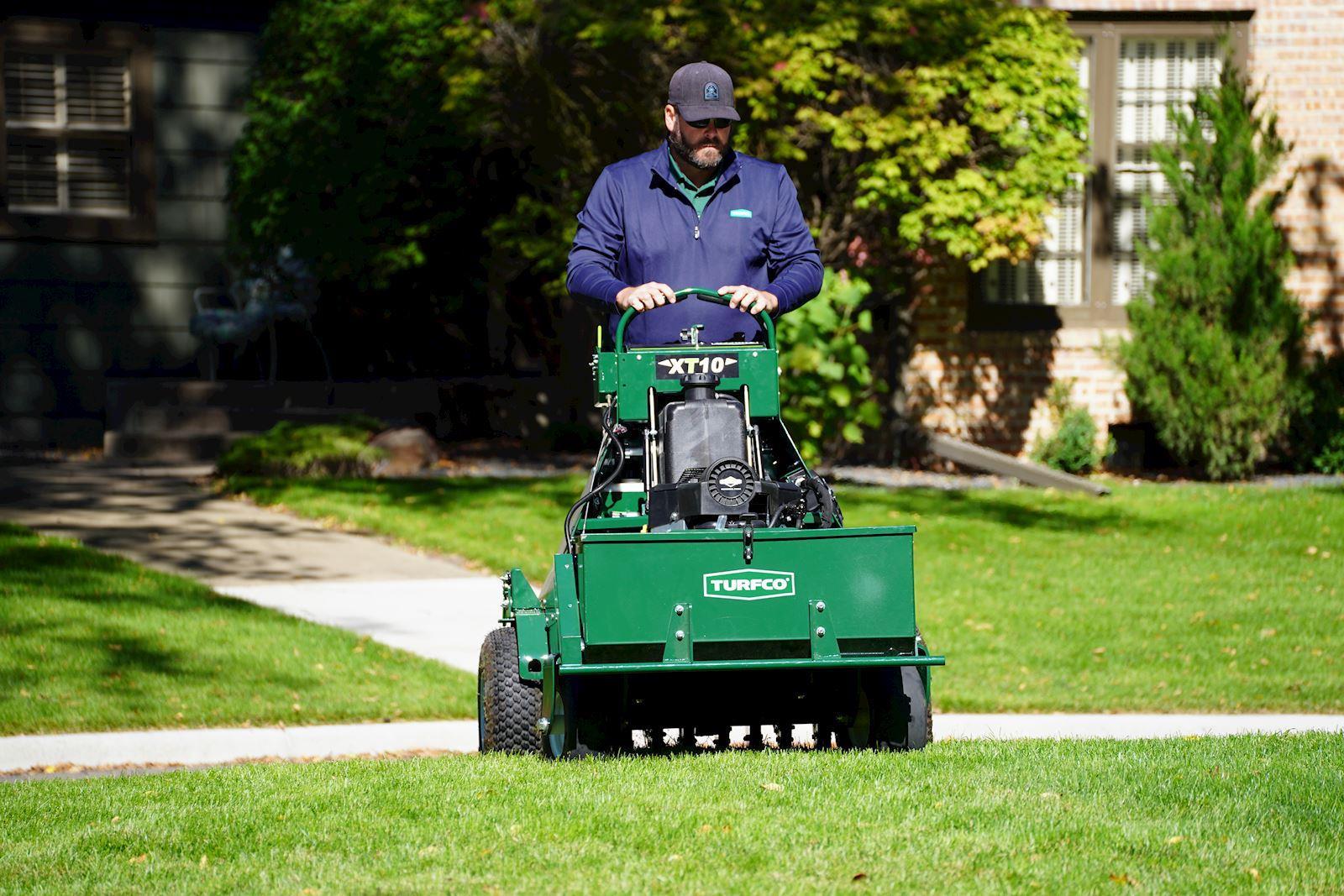
Signs Your Lawn Needs Aeration
You’re probably overdue if you’re seeing any of these:
• The ground feels hard underfoot, almost like walking on concrete
• Rainwater pools on the surface or runs off instead of soaking in
• Grass is thinning out, especially in high-traffic areas
• Bare patches are spreading
• The lawn browns out fast in summer heat and is slow to recover
• You have pets, kids, or regular foot traffic across the same paths
Any two of those together usually means compaction is the underlying problem — not a fertilizer issue, not a watering issue.
What Core Aeration Actually Does
We pull small plugs of soil out of the lawn and leave them on the surface to break down. Those openings do three things:
• Relieve compaction — soil particles that have been pressed together get room to loosen
• Open a path for water and nutrients — instead of running off the surface, they reach the root zone
• Give roots room to grow deeper — deeper roots mean a lawn that handles Missouri summers instead of struggling through them
Core aeration pulls actual plugs. Spike aeration just pokes holes and can make compaction worse by pressing soil outward. We core aerate.
Why We Pair It With Overseeding?
Aeration alone helps an existing lawn. Aeration plus overseeding rebuilds one.
New seed needs direct contact with soil to germinate. Broadcast it onto an untouched lawn and most of it sits on top of the thatch and never takes. Broadcast it right after aeration and a good portion of it drops into the openings — where it has moisture, shade, and protection while it establishes.
The result is a denser lawn, which does more than look better. Thick turf crowds out weeds before they get established, which means less weed pressure — and less money spent on weed control — the following year.
Our Seed vs. the Bag From the Box Store We use a tall fescue blend chosen for St. Charles County conditions:
• Blended for our soil and climate — heat, drought, cold swings, and clay
• Higher germination rate — more of what we put down actually grows
• No filler seed — box store bags often pad the mix with annual ryegrass that looks great for six weeks and then dies
Just tell your crew at your appointment if you’d like our blend added to your service.
When to Schedule?
Early to mid-September is the ideal window in Missouri. Soil is still warm enough for germination, air temperatures have come down, and new grass has the full fall and following spring to establish before it faces summer heat.
Spring aeration (February through April) works and is better than skipping a year — but fall gives noticeably stronger results.
Book 3 to 6 weeks ahead. September and October fill up fast, and reserving early is how you get the timing you want instead of whatever’s left.
What It Costs
Aeration and overseeding packages start at $219. Final pricing depends on lawn size, access, and whether you’re adding our seed blend.
How to Prepare
A little prep helps our crew work faster and protects your yard:
• Mow the lawn 1–2 days before your appointment
• Mark shallow sprinkler heads, wires, and invisible fence lines
• Clear pet waste, toys, hoses, and yard decor off the lawn
• Unlock any gates we’ll need to get through
• Water the day before if it’s been dry — aeration works best in slightly moist soil
Common Questions
How long do the plugs stay on the lawn?
Usually one to two weeks. They break down on their own with rain and mowing — no need to rake them up.
Can I mow after aeration?
typically wait until new seed reaches ~3 inches]
How often should I aerate?
Most Missouri lawns benefit from annual aeration because of the clay. Lawns with heavy traffic or severe compaction may need it more often